
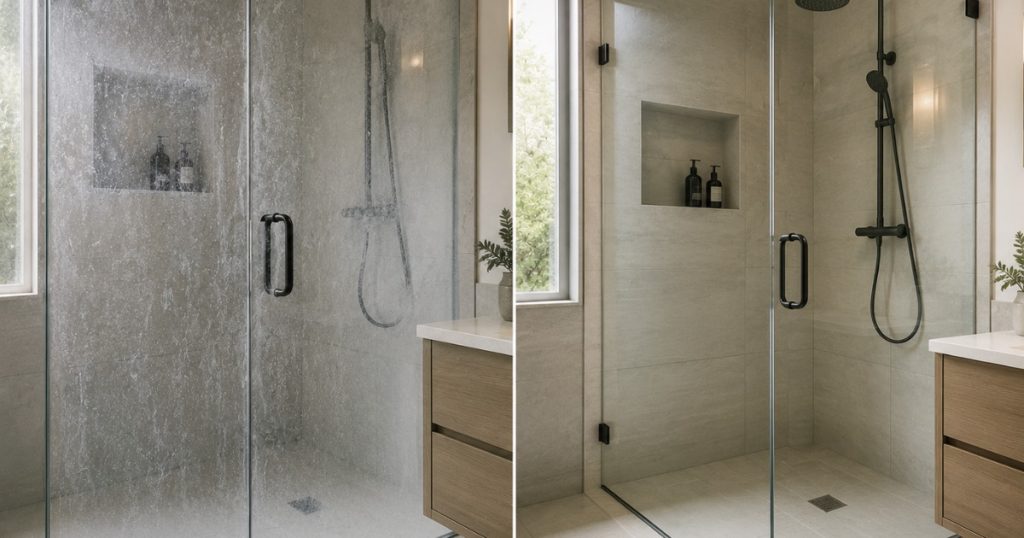
A sparkling shower screen can make your whole bathroom feel brighter, cleaner and more modern. However, shower glass rarely stays crystal clear without regular care. Cloudy shower glass can make even a clean bathroom look dull and neglected. When soap scum, limescale and hard-water deposits build up, the glass loses its clarity and becomes difficult to see through. The good news is you can restore cloudy shower glass with the right cleaning approach and a few simple prevention habits.
This cloudiness usually develops slowly as water, minerals, soap residue and body products build up on the glass. At first, you might only notice a few marks around the edges. If you leave them untreated, those small spots can spread across the entire shower screen and become much harder to shift.
The good news is that you can often Restore Cloudy Shower Glass without replacing the screen. The key is understanding what causes the problem, choosing the right cleaning method and dealing with build-up before it becomes severe.
In this guide, we explain why shower glass turns cloudy and share practical ways to bring back its shine while helping you avoid damage to the surface.
Why Does Shower Glass Turn Cloudy?
Every time you use your shower, water droplets remain on the glass. As the water evaporates, minerals can stay behind and form small white spots. When this happens repeatedly, layers of mineral residue gradually develop across the surface.
Soap, shampoo, conditioner and body oils can add to the problem. These substances mix with mineral deposits and create a stubborn film that may not respond to ordinary glass cleaner. Poor cleaning habits and leaving the screen wet after each shower can allow the build-up to become even more noticeable.
Before you try to Restore Cloudy Shower Glass, take a close look at the type of marks you are dealing with. Light surface residue is generally easier to remove, while years of heavy mineral build-up may require specialist treatment.
What Are the Main Causes of Cloudy Shower Glass?
Several factors can contribute to cloudy shower glass, and you may be dealing with more than one at the same time. Mineral deposits are a common cause, particularly when water droplets regularly dry on the surface. Soap scum can then stick to these deposits and create another visible layer.
Cleaning product residue can also leave the glass looking dull if it is not rinsed away properly. In some older shower screens, long-term exposure to stubborn deposits may affect the surface itself. Identifying the likely cause helps you choose a safer and more effective way to Restore Cloudy Shower Glass.
1. Start With Gentle Cleaning to Restore Cloudy Shower Glass
Always begin with the least aggressive cleaning method. Use a cleaner specifically suitable for shower glass and apply it with a clean microfibre cloth or soft, non-abrasive sponge. Give the product enough time to work according to its instructions rather than immediately scrubbing harder.
If the first clean does not remove the cloudiness, inspect the glass again. Surface soap residue may disappear while white mineral marks remain behind. You can then move to a specialist product designed for the type of deposits you are dealing with. Working gradually reduces the risk of damaging the glass while still giving you a good chance of restoring its clarity.
2. Remove Mineral Deposits Before They Become Stubborn
Mineral deposits are one of the biggest reasons homeowners need to Restore Cloudy Shower Glass. Each time water dries on the shower screen, small amounts of mineral residue can remain behind. One or two spots may not look like much, but repeated deposits can eventually create a widespread cloudy appearance.
Deal with these marks as early as possible using a suitable glass-safe product. Avoid reaching straight for abrasive tools when the stains are difficult to remove. Heavy scrubbing can create scratches that are far more difficult to fix than the original mineral marks.
3. Deal With Soap Scum and Bathroom Product Residue
Soap scum can make otherwise clean shower glass appear hazy and dull. It develops when soap and body products combine with moisture and minerals on the surface. Over time, this residue can form multiple layers and become increasingly difficult to remove.
Regular light cleaning can prevent the problem from getting out of hand. Pay attention to the lower parts of the screen and areas around handles and edges, where residue may collect more easily. Removing soap build-up regularly can make it much easier to Restore Cloudy Shower Glass and maintain a polished finish.
4. Use Household Cleaning Solutions With Care
DIY cleaning solutions are popular because they are convenient, but they are not suitable for every bathroom surface. White vinegar, for example, may help with certain light mineral deposits, but acidic products can affect some natural stone and other sensitive materials around the shower.
Baking soda also appears in many cleaning tips, but its mildly abrasive texture means you should use it carefully. Always test any cleaning solution in a small, inconspicuous area first and check whether your shower glass has a special protective coating. When in doubt, use a product specifically recommended for the surface.
5. Use a Squeegee After Every Shower
A squeegee is one of the simplest tools for keeping shower glass looking clear. Instead of allowing water droplets to dry naturally, remove them immediately after showering. This reduces the amount of mineral residue that can remain on the surface.
Once you Restore Cloudy Shower Glass, using a squeegee regularly can help protect the result. Start at the top of the screen and work down in smooth strokes. It only takes a minute, but this small habit can save plenty of elbow grease later.
6. Improve Bathroom Ventilation
Good ventilation helps moisture leave your bathroom more efficiently. Use an extractor fan while showering and continue running it afterwards where appropriate. Official guidance on Tenancy Services ventilation requirements can help you manage moisture more effectively.
Use an extractor fan while showering and continue running it afterwards where appropriate. Opening a window can also improve airflow when practical. Better moisture management can help your entire bathroom stay fresher while supporting your regular shower glass maintenance routine.
7. Avoid Harsh Products and Aggressive Scrubbing
When stubborn marks refuse to move, it is tempting to use stronger chemicals or rougher tools. However, this approach can cause permanent damage. Abrasive pads, metal scrapers and unsuitable cleaning products may scratch the glass or damage specialised surface coatings.
Always follow the instructions for your chosen cleaning product and never assume that more pressure will produce better results. If several appropriate cleaning methods fail, professional restoration may be a better option than continuing to scrub the glass aggressively.
8. Know When Professional Restoration Is the Better Option
Some cloudy shower screens have years of built-up mineral deposits that ordinary cleaning cannot remove effectively. If repeated cleaning makes little difference, professional shower glass restoration may offer a more practical solution.
A specialist can assess the condition of the glass and determine whether the marks are removable deposits or permanent surface damage. Professional treatment may help Restore Cloudy Shower Glass and improve its clarity without the expense and hassle of immediately replacing the entire screen.
How to Restore Cloudy Shower Glass Safely
When you want to Restore Cloudy Shower Glass, start with the gentlest suitable cleaning method. Use a glass-safe cleaner with a soft microfibre cloth to loosen surface residue. For tougher mineral deposits, choose a specialist product designed for shower glass and follow its instructions carefully.
Avoid abrasive pads, sharp tools and aggressive scrubbing, as these can scratch the glass or damage protective coatings. If you are unsure about the type of glass you have, check the manufacturer’s cleaning recommendations before using stronger products.
Why Does Cloudiness Return After Cleaning?
If the cloudy appearance quickly comes back, water may be drying naturally on the shower screen and leaving fresh mineral deposits behind. Soap, shampoo and body products can then stick to these deposits, gradually creating another dull layer.
Once you Restore Cloudy Shower Glass, use a squeegee after each shower and clean new marks before they become stubborn. Keeping the bathroom well ventilated can also help surfaces dry faster and make ongoing maintenance easier.
How Often Should You Clean Your Shower Glass?
Your cleaning schedule should depend on how frequently the shower is used and how quickly visible marks appear. A busy family bathroom may need more frequent attention than a spare bathroom that only gets occasional use.
Instead of waiting until the screen becomes visibly cloudy, give it regular light cleans and remove excess water after use. Staying on top of small marks takes far less effort than tackling months of built-up mineral deposits.
Simple Ways to Prevent Cloudy Shower Glass
Prevention starts with reducing the amount of water that dries directly on the glass. A quick squeegee after each shower can remove most water droplets before they leave visible mineral spots behind.
Regular cleaning and effective bathroom ventilation also make a difference. After you Restore Cloudy Shower Glass, these simple habits can help maintain the clear finish and reduce the need for frequent deep cleaning.
Can Cloudy Shower Glass Be Permanently Damaged?
Not every cloudy shower screen is permanently damaged. In many cases, the dull appearance comes from layers of mineral deposits and soap residue sitting on the surface. Suitable cleaning or professional restoration may significantly improve the glass.
However, deposits that remain for a long time can sometimes leave stubborn marks or contribute to surface damage. If the cloudiness does not improve after appropriate treatment, professional assessment can help determine whether restoration is still possible.
Shower Glass Cleaning Mistakes You Should Avoid
Using rough scrubbers or overly abrasive products can turn a cleaning problem into permanent surface damage. Always choose products specifically suitable for glass and avoid applying excessive pressure when dealing with stubborn marks.
You should also never mix different cleaning chemicals, as some combinations can create dangerous fumes or reactions. Follow product instructions carefully and tackle fresh water spots early before they develop into a thick, difficult-to-remove layer.
When Is Professional Shower Glass Restoration the Better Choice?
If repeated cleaning makes little or no difference, the deposits may be too stubborn for normal household methods. Heavy mineral build-up, widespread white staining and deeply embedded marks often require a more specialised approach.
A professional can assess the condition of the glass and determine whether restoration can improve its clarity. Getting expert help can also prevent unnecessary damage caused by repeated aggressive cleaning and may help you avoid replacing an otherwise usable shower screen.
Keep Your Restored Shower Glass Sparkling for Longer
After you Restore Cloudy Shower Glass, regular maintenance is the key to protecting the result. Remove water with a squeegee, clean soap residue promptly and deal with new mineral spots before they become difficult to shift.
A simple routine can go a long way. Keep the bathroom properly ventilated, use suitable glass-cleaning products and avoid letting heavy build-up develop again. These small steps can help your shower screen stay clear, fresh and sparkling for longer.
Is Professional Shower Glass Restoration Worth It?
Professional restoration can be worthwhile when the glass itself remains in good condition but stubborn deposits have ruined its appearance. Instead of replacing the whole screen, restoration focuses on improving the existing surface and removing build-up where possible.
It can be particularly useful for shower screens with widespread cloudiness that no longer respond to normal cleaning. A professional assessment can help you understand what result is achievable before deciding whether restoration or replacement makes more sense.
Final Thoughts: Bring Back the Shine to Cloudy Shower Glass
Cloudy shower glass does not always mean you need a brand-new shower screen. In many cases, mineral deposits, soap scum and water marks are responsible for the dull appearance and can be improved with the right treatment.
Start with safe cleaning methods and stay on top of regular maintenance. If stubborn cloudiness refuses to budge, professional treatment may be the most effective way to Restore Cloudy Shower Glass and bring back its clean, polished appearance.
For professional shower glass restoration and a sparkling finish without the hassle,
call our team today on 0800 08 4444.