
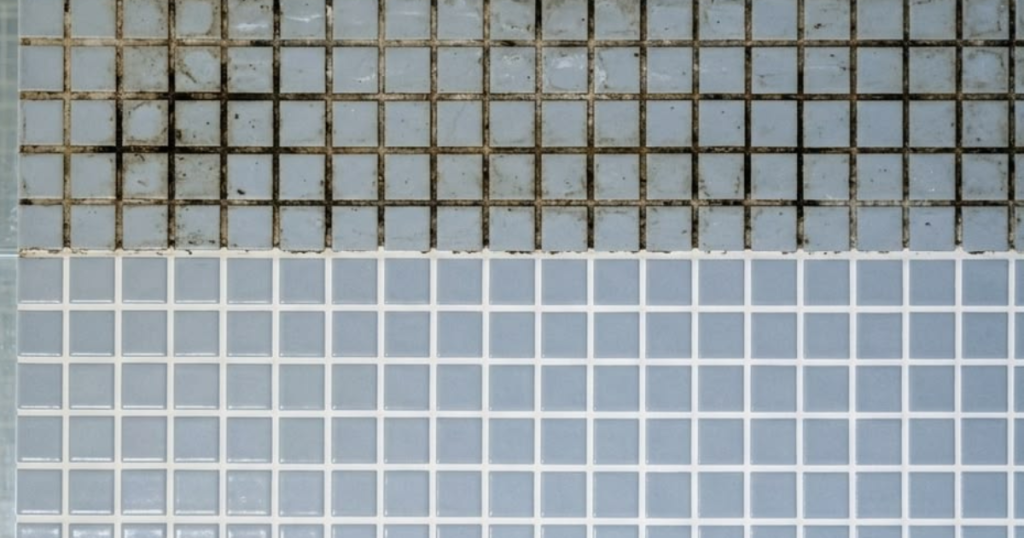
Black grout can make an otherwise clean bathroom look old and poorly maintained. If you have noticed black grout in shower areas, the cause is usually linked to moisture, mould, soap residue, dirt or ageing grout.
The good news is that dark grout does not always mean you need to replace your tiles. With the right cleaning, ventilation and maintenance, you can often improve the appearance and help prevent the problem from returning.
This guide explains what causes black grout in shower areas, how to clean it, how to prevent it and when professional grout restoration may be the better option.
What Causes Black Grout in Shower Areas?
Moisture is one of the biggest reasons grout becomes dark. Every shower produces steam and water, and if the bathroom does not dry properly, moisture can remain around the grout lines.
1. Mould and Mildew
Mould is a common cause of black grout in shower areas. Bathrooms provide a warm and damp environment where mould can grow, particularly when moisture remains on surfaces for long periods.
If your shower stays damp after use, black spots can gradually develop along grout lines and silicone joints.
For general advice on reducing household dampness and mould, Health New Zealand recommends using bathroom extractor fans and improving airflow.
If the black staining returns soon after cleaning, the underlying moisture problem may still be present.
2. Poor Bathroom Ventilation
A poorly ventilated bathroom can make black grout much harder to control. Shower steam needs somewhere to go. If it remains trapped inside the bathroom, it can keep grout and other surfaces damp.
The New Zealand Building Code guidance on internal moisture requires wet areas to have suitable ventilation and surfaces that are impervious and easily cleaned.
The EECA guide to reducing dampness also recommends using bathroom extractor fans to control moisture and ensuring they vent outside rather than into a roof space.
Better ventilation will not repair damaged grout, but it can help reduce the moisture that encourages mould and mildew.
3. Soap Scum and Body Products
Not every dark grout mark is mould. Soap, shampoo, conditioner and body wash can leave residue along the grout lines.
Over time, this residue can collect dirt and make the grout look grey, brown or black.
Regular cleaning helps prevent this build-up from becoming difficult to remove.
4. Dirt Trapped in Porous Grout
Grout can hold onto dirt more easily than smooth tile surfaces. Its porous texture can trap moisture, grime and cleaning residue.
This is why ordinary bathroom cleaning may not always remove heavily stained grout.
If your grout is heavily stained but still in good condition, professional Tile & Grout Cleaning may be worth considering. GroutXpert provides professional tile and grout cleaning, regrouting, sealing and restoration services across Wellington and Palmerston North.
5. Old or Damaged Grout
Age can also affect the appearance and condition of grout. Grout can become cracked, loose, worn or permanently discoloured over time.
If your black grout in shower areas is also cracking or crumbling, cleaning alone may not solve the problem.
In that situation, the grout may need professional repair or replacement.
Is Black Grout in Shower Areas Always Mould?
No, black-looking grout is not always mould. Dark grout can result from mould, mildew, dirt, soap residue, staining or deteriorating grout.
Start by cleaning a small affected section and checking the result.
If the dark colour disappears, surface contamination may be the main problem. If the grout remains dark or the staining quickly returns, further assessment may be worthwhile.
Watch for other warning signs such as:
- Cracked grout
- Missing grout
- Soft or crumbling grout
- Loose tiles
- A musty smell
- Damp areas that do not dry
- Mould returning soon after cleaning
- Water appearing outside the shower
These signs may indicate that the problem requires more than routine cleaning.
How to Clean Black Grout in Shower Areas
Start with gentle cleaning before reaching for strong chemicals. The correct cleaning method depends on the type of tile and grout you have.
Step 1: Remove Surface Dirt
Start by clearing loose dirt and debris from the shower. Clean the tiles and grout with a suitable bathroom cleaning product and a soft brush or cloth.
Avoid immediately using harsh chemicals or aggressive scrubbing.
Step 2: Concentrate on the Grout Lines
The grout lines usually need more attention than the tiles. Use a suitable grout brush and work carefully along the affected areas.
Clean one section at a time so you can see how well the method is working.
Step 3: Rinse the Area
Do not leave cleaning residue sitting on the grout. Follow the cleaning product instructions and rinse the area appropriately.
Afterwards, remove excess water and allow the shower to dry.
Step 4: Improve Ventilation
Cleaning alone will not prevent black grout if the shower remains damp. Use the extractor fan while showering and continue ventilation afterwards.
Health New Zealand recommends using extractor fans in bathrooms to help remove moisture and improve airflow.
Why Does Black Grout in Shower Areas Keep Coming Back?
Recurring black grout usually means the conditions causing the problem have not changed.
Poor Airflow Can Keep the Shower Damp
A shower that stays wet for hours gives mould and mildew more opportunity to grow. Make sure your bathroom has adequate airflow and that the extractor fan is working effectively.
EECA advises that bathroom extractor fans should vent moisture outside the house rather than into roof spaces or other cavities.
The Shower May Need Better Moisture Control
Keeping the shower dry between uses can make a real difference. Use a squeegee to remove excess water from tiles and glass after showering.
Opening a window where practical can also help increase airflow.
Damaged Grout Can Hold Moisture
Cracked or deteriorated grout is harder to keep clean. Dirt and moisture can collect in damaged sections, allowing the dark staining to return.
If you have cracked grout, our guide on Tile Re-Grouting: How to Fix Cracked or Mouldy Tile Grout explains the warning signs and regrouting process.
How to Prevent Black Grout in Shower Areas
Preventing heavy build-up is easier than repeatedly trying to remove it. A few simple habits can help keep your shower cleaner.
Keep the Bathroom Well Ventilated
Use your extractor fan whenever you shower. Keep it running for an appropriate period afterwards so moist air can leave the bathroom.
If the fan seems weak or ineffective, have the ventilation system checked.
Wipe Down Wet Surfaces
A quick wipe can remove a lot of excess moisture. Use a squeegee or suitable cloth on shower walls and glass after use.
This reduces the amount of water sitting around grout lines.
Clean Grout Regularly
Do not wait until your grout turns black before cleaning it. Regular light cleaning can help prevent soap residue, dirt and other contamination from building up.
Pay extra attention to corners and areas that remain wet for longer.
Check Your Extractor Fan
Your extractor fan needs to remove moisture effectively. If it is noisy, weak or not clearing steam, it may need maintenance or replacement.
EECA recommends that bathroom extractor fans vent to the outside and that filters are kept clean.
Repair Damaged Grout Early
Small grout problems are easier to address before they spread. Cracks, gaps and crumbling grout should not simply be covered with another layer.
Professional Tile Re-Grouting can remove deteriorated grout and replace it with fresh grout where appropriate. GroutXpert’s regrouting service is designed for aged, stained, cracked and mouldy grout.
Can You Use Bleach on Black Grout in Shower Areas?
Be careful when choosing strong cleaning products. Bleach may help with some mould staining, but it is not suitable for every tile, grout or bathroom surface.
Always follow the manufacturer’s instructions for the product you are using.
Never mix bleach with other cleaning chemicals. Some combinations can produce dangerous fumes.
For general mould-cleaning advice, Health New Zealand’s healthy homes guidance recommends cleaning mould with warm soapy water, rinsing well and drying the area.
When Should You Stop Cleaning Black Grout in Shower Areas?
Repeated cleaning is not always the answer. If you have cleaned the same grout several times and the black staining keeps returning, it is worth looking at the condition of the grout.
Professional assessment may be useful when:
- The grout remains black after cleaning
- Mould keeps returning
- Grout is cracked or missing
- Grout is soft or crumbling
- Tiles feel loose
- The shower has a persistent musty smell
- Water appears outside the shower
- Silicone around the shower is damaged
- You suspect moisture is getting behind the tiled area
These signs can indicate that your shower needs restoration or repair rather than another round of household cleaning.
Black Grout in Shower: Cleaning or Re-Grouting?
The best solution depends on the condition of your existing grout.
If the grout is sound but dirty or stained, professional cleaning may be enough.
If the grout is heavily damaged, cracked, missing or permanently discoloured, regrouting may provide a more suitable solution.
GroutXpert’s Tile Re-Grouting service removes old, damaged or mouldy grout and replaces it with fresh grout without automatically removing the existing tiles.
You may not need a complete bathroom renovation simply because your grout looks old.
Can Grout Sealing Help Prevent Black Grout in Shower Areas?
Grout sealing can help protect suitable grout surfaces from staining and moisture, but it is not a replacement for proper ventilation or moisture control.
After appropriate cleaning and preparation, professional sealing can provide an additional layer of protection for porous grout.
If your grout is already damaged, it should be assessed before sealing.
You can also explore GroutXpert’s Tile and Grout Sealing & Repairs service as part of a wider tile restoration solution.
The key is to deal with the underlying cause first.
Does Black Grout Mean You Need to Replace Your Shower Tiles?
Not necessarily. Black grout does not automatically mean your tiles need replacing.
Depending on the condition of the tiled area, professional cleaning, grout repair, regrouting or sealing may restore the shower without removing the existing tiles.
GroutXpert provides Bathroom Shower Grout & Tile Restoration as part of its wider tile and grout restoration services.
However, loose tiles, damaged waterproofing, persistent moisture or signs of water damage need proper assessment.
New Zealand Building Code Clause E3 covers internal moisture and requires wet-area surfaces to be impervious, easily cleaned and appropriately ventilated.
Building Performance also provides guidance on well-sealed shower penetrations, explaining the importance of preventing water from getting behind shower linings.
Professional Help for Black Grout in Shower Areas
Sometimes the easiest way to deal with stubborn grout is to have the shower professionally assessed.
GroutXpert provides tile and grout restoration services across Wellington and Palmerston North, including cleaning, regrouting, repairs, sealing, silicone replacement and shower restoration.
Their professional Tile & Grout Cleaning service can help with stubborn mould, stains, soap scum and built-up grime, while damaged grout can be addressed through regrouting or repair.
Professional restoration can help you restore an existing tiled shower instead of automatically replacing the entire area.
Final Thoughts: Keep Black Grout in Shower Areas Under Control
Black grout is usually a sign that your shower needs more than a quick wipe. Moisture, mould, soap residue, dirt, poor ventilation and ageing grout can all contribute to dark grout lines.
Start by cleaning the affected area and improving bathroom ventilation. Keep the shower as dry as practical and check your grout regularly.
If the black grout in shower areas keeps returning, do not simply keep scrubbing it. Cracked, crumbling or permanently stained grout may need professional cleaning, sealing, repair or regrouting.
A little maintenance can help keep your bathroom cleaner and make it easier to spot problems before they become bigger repairs.
Need Help With Black Grout in Shower Areas?
Do not let stained, mouldy or damaged grout make your bathroom look older than it is.
GroutXpert provides professional tile and grout cleaning, regrouting, sealing, grout repairs and bathroom shower restoration across Wellington and Palmerston North.
If your black grout in shower areas will not come clean or keeps coming back, contact GroutXpert for an assessment and find out whether your existing tiles can be restored.
Call GroutXpert on 0800 08 4444 or request a free, no-obligation quote today.