
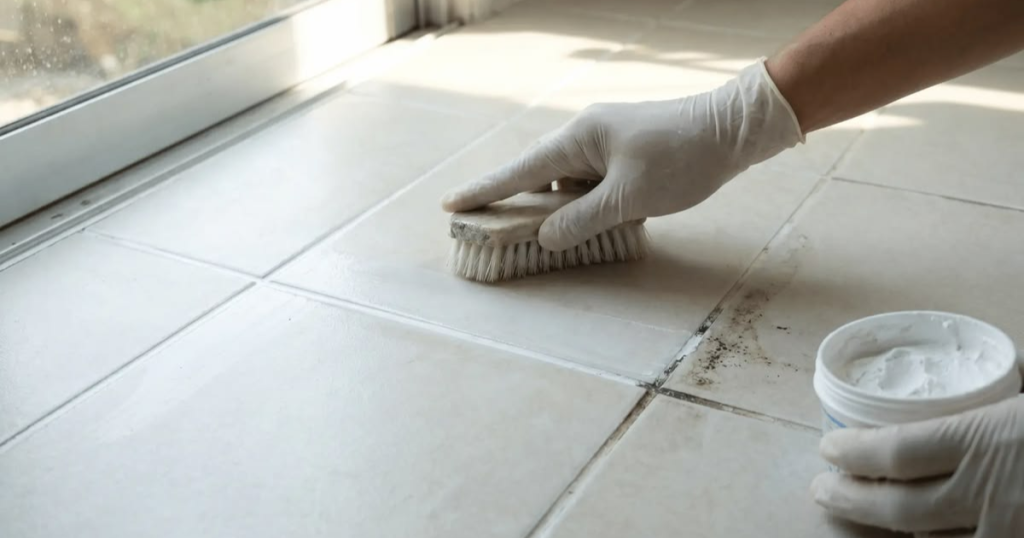
Stone tile cleaning needs a little more care than cleaning ordinary ceramic or porcelain tiles. Natural stone such as marble, limestone, travertine and slate can react badly to acidic cleaners, harsh chemicals and abrasive tools. Using the wrong product can leave scratches, dull patches, stains or permanent surface damage. In this guide, we explain what you should never use for stone tile cleaning and what to use instead.
If you are doing stone tile cleaning at home, the product you choose matters just as much as the cleaning method. The wrong cleaner can dull the surface, damage the finish, weaken grout or leave marks that are difficult to remove.
This guide explains what you should never use for stone tile cleaning, what to use instead, and when professional cleaning may be a better option.
Why Does Natural Stone Need Special Stone Tile Cleaning?
Natural stone is different from ordinary ceramic and porcelain tiles.
Materials such as marble, limestone, travertine, slate and some other natural stones can have a porous or chemically sensitive surface.
That means a cleaner that works well on one type of tile may cause problems on another.
For effective stone tile cleaning, you need to consider:
- The type of natural stone
- Whether the surface has been sealed
- The type of finish
- How heavily the area is used
- The type of dirt or staining
- The condition of the grout
- Whether the stone is located in a wet area
The safest approach is to identify the stone first and then choose a cleaning product designed for that surface.
What Should You Never Use for Stone Tile Cleaning?
Some common household cleaning products can be too harsh for natural stone.
You should be careful with products that contain strong acids, aggressive chemicals or abrasive ingredients.
1. Avoid Vinegar for Stone Tile Cleaning
Vinegar is one of the most common household cleaners that you should avoid on many natural stone surfaces.
Vinegar contains acetic acid. Acidic products can react with calcium-based stones such as marble and limestone.
This can cause:
- Dull patches
- Etching
- Loss of surface shine
- Rough-looking areas
- Permanent-looking marks
While vinegar may be suitable for some household cleaning jobs, it is not a universal tile cleaner.
For stone tile cleaning, use a cleaner specifically labelled as suitable for your type of natural stone.
Can You Use Lemon Juice for Stone Tile Cleaning?
Lemon juice may be natural, but natural does not always mean stone-safe.
Like vinegar, lemon juice is acidic.
Using lemon juice directly on sensitive stone can cause etching or changes to the surface finish.
You may not notice a problem immediately. The damage can become more obvious after the stone dries or when light hits the affected area.
Avoid DIY acidic treatments when cleaning marble, limestone, travertine or other acid-sensitive stone.
If you are unsure about your stone, test any cleaning product on a small, hidden area first or ask a professional.
Is Bleach Safe for Stone Tile Cleaning?
Bleach needs caution because it can be too aggressive for some natural stone surfaces, sealers and surrounding materials.
Many homeowners reach for bleach when they see mould, dark grout or bathroom stains.
However, stone tile cleaning is not simply about choosing the strongest product available.
Bleach can also affect coloured materials and may not solve the underlying cause of recurring moisture or mould.
Health New Zealand recommends practical moisture-control steps such as using bathroom extractor fans and improving airflow to help reduce dampness in homes. Health New Zealand – Keeping Your Home Healthy
If mould keeps returning, look at the moisture problem rather than repeatedly applying stronger chemicals.
Avoid Harsh Abrasive Powders for Stone Tile Cleaning
Abrasive powders can scratch or dull some natural stone finishes.
Products designed to remove tough marks from sinks, baths or other hard surfaces may contain abrasive particles.
Scrubbing these products into natural stone can leave:
- Fine scratches
- Dull patches
- Uneven finishes
- Visible wear
- Damage around polished areas
For regular stone tile cleaning, choose a soft cleaning cloth, microfiber mop or non-abrasive pad that is suitable for the stone.
More scrubbing does not always mean a cleaner surface.
Do Not Use Steel Wool on Natural Stone
Steel wool is far too aggressive for many stone surfaces.
It can scratch polished stone and may leave behind small metal particles.
You should also avoid using rough scouring pads unless the manufacturer specifically recommends them for your stone.
Instead, start with the least aggressive cleaning method possible.
A soft cloth, soft brush and suitable pH-neutral stone cleaner are usually a better starting point for routine stone tile cleaning.
What About Strong Toilet Cleaners?
Toilet cleaners and bathroom descaling products are not automatically suitable for natural stone.
Many descaling products use acids to dissolve mineral deposits.
That can be a problem when the same product comes into contact with acid-sensitive stone.
Never assume that a product is safe simply because it is designed for bathrooms.
Stone tile cleaning requires a product that is compatible with the stone itself.
If your natural stone is around a shower, bath or vanity, keep strong bathroom chemicals away from the stone unless the product specifically states that it is suitable.
Be Careful With Generic Bathroom Sprays
A general bathroom cleaner may not be the right choice for natural stone.
Many bathroom sprays are designed to remove soap scum, mineral deposits and everyday grime from common bathroom surfaces.
Natural stone can react differently.
Before using a general-purpose cleaner for stone tile cleaning, check the label for:
- Acidic ingredients
- Bleach
- Abrasive ingredients
- Strong solvents
- Warnings against use on natural stone
If the label says not to use it on marble, limestone or natural stone, take that warning seriously.
Can Dishwashing Liquid Be Used for Stone Tile Cleaning?
A small amount of mild dishwashing liquid may be suitable for some basic cleaning, but it is not always the best long-term option.
Too much detergent can leave a film on the stone.
Over time, that residue can make the surface look dull or attract more dirt.
For regular stone tile cleaning, a pH-neutral cleaner specifically designed for natural stone is generally a better choice.
Always follow the product instructions and avoid using more cleaner than recommended.
Never Mix Cleaning Chemicals
Never mix different cleaning products together to create a stronger cleaner.
Combining household chemicals can create dangerous fumes or unwanted chemical reactions.
This is particularly important when dealing with bleach and acidic products.
For safe stone tile cleaning, use one suitable product at a time and follow its instructions.
What Should You Use for Stone Tile Cleaning Instead?
The safest stone tile cleaning routine usually starts with simple methods.
For everyday maintenance:
- Remove loose dirt and dust first.
- Use a soft mop or microfiber cloth.
- Use a pH-neutral stone cleaner where required.
- Follow the product dilution instructions.
- Avoid excessive water sitting on the stone.
- Wipe away cleaning residue.
- Allow the surface to dry properly.
The goal is to clean the stone without attacking its surface or leaving behind a chemical residue.
If your stone has a protective sealer, follow the sealer manufacturer’s cleaning recommendations as well.
For professional help with stained or heavily soiled tiled surfaces, you can explore GroutXpert’s Tile & Grout Cleaning service.
Stone Tile Cleaning: What About Grout?
The stone and the grout may need different levels of cleaning attention.
Grout can collect dirt, soap residue, mould and other deposits over time.
However, you should still avoid aggressive scrubbing and unsuitable chemicals that could damage nearby natural stone.
GroutXpert provides professional Tile & Grout Cleaning using professional equipment and cleaning methods designed for tiled surfaces. GroutXpert also identifies damaged grout as part of its restoration approach.
Good stone tile cleaning should improve the whole tiled area rather than clean the stone while damaging the grout.
Should You Use a Steam Cleaner for Stone Tile Cleaning?
Do not assume that every natural stone surface is suitable for steam cleaning.
Steam and heat can affect some finishes, sealers and surrounding materials.
Before using a steam cleaner for stone tile cleaning, check the manufacturer’s instructions for the stone and any sealant applied to the surface.
If you are unsure, professional assessment is safer than experimenting on an expensive natural stone surface.
What If Your Natural Stone Already Looks Dull?
A dull surface does not always mean the stone simply needs stronger cleaning.
The problem could be:
- Chemical etching
- Scratches
- Sealer deterioration
- Soap residue
- Mineral deposits
- Embedded dirt
- General wear
- Incorrect previous cleaning
Using a stronger chemical can sometimes make the problem worse.
If ordinary stone tile cleaning does not restore the appearance, the surface may need professional cleaning or restoration rather than a stronger household cleaner.
GroutXpert offers a range of Tile & Grout Services including cleaning, regrouting, sealing and repairs.
How Can You Prevent Damage During Stone Tile Cleaning?
A few simple habits can make natural stone easier to maintain.
Clean Spills Quickly
Do not leave acidic drinks, food spills or other staining substances sitting on natural stone.
Wipe spills as soon as you notice them.
This is particularly important for porous or acid-sensitive stone.
Use the Right Cleaning Product
Choose a cleaner that clearly states it is suitable for your specific stone.
Do not rely only on the words “natural”, “powerful” or “deep cleaning” on the label.
Avoid Over-Cleaning
More chemical does not mean better stone tile cleaning.
Follow the recommended dilution and application time.
Keep Wet Areas Ventilated
Good ventilation helps manage moisture around bathroom stone tiles.
Use your extractor fan during and after showering and allow the area to dry.
New Zealand’s Building Code Clause E3 covers internal moisture and requires wet-area surfaces to be impervious and easily cleaned, with ventilation provisions for health and safety. Building Performance – E3 Internal Moisture
Health New Zealand also recommends using extractor fans in bathrooms or opening a window to improve airflow. Health New Zealand – Ventilation
Check Your Grout
Damaged grout can make a tiled area harder to maintain.
Cracked, missing or deteriorated grout should be addressed rather than covered with repeated cleaning.
If your grout needs replacing, GroutXpert provides Tile Re-Grouting for damaged and deteriorated grout joints.
How Often Should You Do Stone Tile Cleaning?
The right cleaning frequency depends on how much the surface is used.
A busy bathroom, kitchen or entrance may need more frequent cleaning than a low-use area.
For most homes, regular light cleaning is better than waiting until dirt has built up heavily.
Your routine can include:
- Regular dust and dirt removal
- Prompt spill cleaning
- Gentle mopping
- Periodic deeper cleaning
- Checking grout and joints
- Checking the condition of the sealer
Consistent stone tile cleaning helps prevent heavy build-up and makes the surface easier to maintain.
For heavily soiled tiled surfaces, professional cleaning may be more effective than repeated household cleaning.
You can also read GroutXpert’s related blog, Tile Re-Grouting: How to Fix Cracked or Mouldy Tile Grout, if deteriorated grout is becoming part of the problem.
When Should You Call a Professional for Stone Tile Cleaning?
Some stone cleaning problems are better left to someone with the right equipment and experience.
Consider professional help if you notice:
- Etching
- Deep stains
- Scratches
- Heavy soap build-up
- Mineral deposits
- Dark or mouldy grout
- Dull patches
- Uneven colour
- Difficult-to-remove dirt
- Uncertainty about which cleaning product to use
Professional stone tile cleaning can also help when previous cleaning attempts have left the surface looking worse.
GroutXpert provides professional tile and grout restoration across Wellington and Palmerston North, including cleaning, regrouting, repairs and sealing.
Stone Tile Cleaning: What You Should Never Use
The biggest mistake is treating natural stone like ordinary tile.
For safer stone tile cleaning, avoid:
- Vinegar on acid-sensitive stone
- Lemon juice
- Strong acidic cleaners
- Harsh descaling products
- Abrasive powders
- Steel wool
- Rough scouring pads
- Unapproved bleach-based products
- Strong chemicals used without checking the label
- Mixed cleaning chemicals
Instead, choose gentle, stone-safe products and cleaning tools that match the type of natural stone you have.
If you are unsure, professional advice can save you from turning a simple cleaning job into an expensive restoration project.
Final Thoughts on Stone Tile Cleaning
Natural stone can stay beautiful for years when you clean it correctly.
The key is not to reach for the strongest chemical when the surface looks dirty. Start with gentle stone tile cleaning, use a suitable pH-neutral product, avoid abrasive tools and deal with spills and moisture promptly.
New Zealand’s Building Performance guidance highlights the importance of managing internal moisture, ventilation and easily cleaned wet-area surfaces.
If your natural stone already has stains, etching, dull patches or heavy build-up, avoid experimenting with stronger household chemicals.
The right cleaning method can protect the appearance of your stone while helping your tiled surfaces stay easier to maintain.
Need Professional Stone Tile Cleaning?
Not sure which cleaning method is safe for your natural stone tiles?
GroutXpert can assess your tiled surface and recommend an appropriate cleaning or restoration approach. Its services include professional Tile & Grout Cleaning, tile regrouting, sealing and repairs across Wellington and Palmerston North.
Get in touch with GroutXpert for a free quote and give your natural stone tiles the right care.