
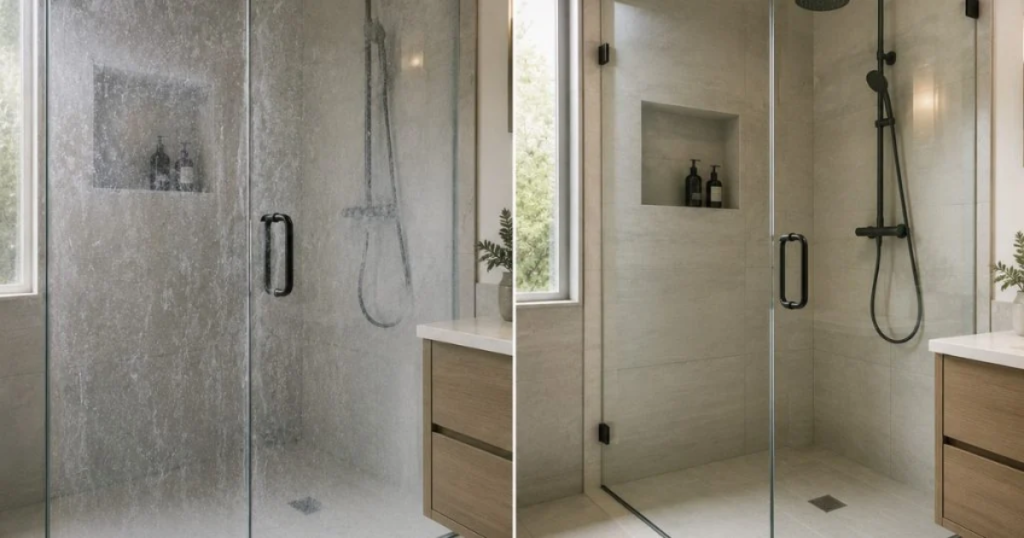
Hard water stains can make even a freshly cleaned bathroom look dull, cloudy and dirty. White spots on shower glass, chalky marks on bathroom tiles and mineral deposits around taps are common problems that become harder to remove when they build up over time.
For New Zealand homeowners, understanding what causes hard water stains is the first step towards keeping bathroom surfaces clean. These marks often appear when water evaporates and leaves behind minerals such as calcium and magnesium. Soap residue can also mix with these minerals, creating a stubborn film on tiles and shower screens.
In this guide, GroutXpert explains how to remove hard water stains safely, which cleaning methods work best for different surfaces, and how to prevent mineral deposits from returning.
What Are Hard Water Stains?
Before choosing a cleaning method, it helps to understand what hard water stains are and why they form.
Hard water contains dissolved minerals, particularly calcium and magnesium. When water droplets dry on bathroom tiles, shower screens and tapware, they can leave mineral deposits behind. Over time, these deposits create visible marks that ordinary bathroom cleaners may not remove easily.
According to Hurunui District Council’s hard water guidance, mineral deposits can cause unsightly scale and water stains on household surfaces.
Common signs of hard water stains include:
- White or cloudy marks on shower glass.
- Chalky deposits around taps and showerheads.
- Dull patches on glossy bathroom tiles.
- White residue along tile grout lines.
- Stubborn water spots that remain after ordinary cleaning.
- A rough or hazy appearance on glass surfaces.
Hard water stains can look similar to soap scum, mould or other types of discolouration. Identifying the cause helps you choose the right cleaning method without damaging your tiles or shower screen.
What Causes Hard Water Stains on Bathroom Tiles and Shower Screens?
Understanding the main causes of hard water stains can help you remove existing deposits and prevent new ones from forming.
1. Water Droplets Dry on Bathroom Surfaces
The main cause of hard water stains is water left to evaporate on tiles and glass.
When shower water dries naturally, it can leave minerals on the surface. Repeated exposure creates layers of deposits that become increasingly difficult to remove.
Solution: Use a squeegee after every shower and wipe tiles, glass and tapware with a soft microfibre cloth. This simple habit removes excess water before mineral deposits can build up.
2. Soap Scum Mixes with Mineral Deposits
Soap scum can make hard water stains more difficult to remove from shower screens and bathroom tiles.
Minerals in hard water can react with certain soaps and contribute to a sticky film. This residue traps dirt and creates cloudy patches that ordinary glass cleaners may not remove.
Solution: Use a suitable bathroom cleaner that targets soap scum and mineral build-up. Rinse the surface thoroughly to remove loosened residue.
3. You Do Not Clean Bathroom Tiles Regularly
Irregular cleaning gives mineral deposits more time to accumulate on tiled surfaces.
A few water spots may seem harmless at first, but repeated exposure can create a thick layer of scale. This is especially noticeable on dark tiles, glossy finishes and frequently used shower screens.
Solution: Clean your bathroom regularly with a product suitable for your tile type. For general maintenance advice, explore our bathroom tile maintenance tips.
4. Cleaning Products Leave Residue Behind
The wrong cleaning product can make hard water stains look worse instead of better.
Some products remove surface dirt but leave a film behind if you do not rinse properly. Other cleaners may be too harsh for natural stone, delicate finishes or certain grout types.
Solution: Choose a cleaner designed for the affected surface, follow the label instructions and test it in a small, hidden area first.
How to Remove Hard Water Stains from Bathroom Tiles
The best way to remove hard water stains from bathroom tiles depends on the tile material and the severity of the deposits.
Step 1: Remove Loose Dirt and Soap Residue
Start by removing everyday dirt before treating mineral deposits.
Wipe the tiles with warm water and a soft cloth to remove loose grime, soap residue and dust. This helps the cleaning solution reach the hard water stains more effectively.
Step 2: Choose a Suitable Tile Cleaner
Selecting the correct cleaner helps remove hard water stains without damaging the tile surface.
For compatible ceramic or porcelain tiles, a manufacturer-approved descaling cleaner may help dissolve mineral deposits. Follow the instructions carefully and avoid using a product that could damage the tile finish or grout.
Important: Do not use vinegar or other acidic cleaners on marble, limestone, travertine or other acid-sensitive natural stone. Acid can etch these surfaces and leave permanent dull marks. Check the manufacturer’s care guidance before using any descaler.
Step 3: Apply the Cleaner and Gently Scrub
Gentle cleaning is often more effective and safer than aggressive scrubbing.
Apply the cleaner as directed, allow it to work for the recommended time and use a soft cloth or non-scratch brush where appropriate. Avoid steel wool, harsh scouring pads and abrasive tools that could scratch the surface.
Step 4: Rinse and Dry the Tiles
Proper rinsing removes loosened mineral deposits and prevents cleaning residue from remaining on the tiles.
Rinse the area thoroughly with clean water, then dry it using a soft microfibre cloth. Once the surface dries, check whether the hard water stains have disappeared.
Step 5: Get Professional Help for Stubborn Deposits
Persistent hard water stains may require specialist cleaning when household products cannot remove the build-up.
If the tiles remain cloudy or dull after careful cleaning, the deposits may be deeply embedded or the surface may already be etched or damaged. GroutXpert’s tile and grout cleaning service may be suitable for stubborn dirt and build-up on compatible tiled surfaces.
How to Remove Hard Water Stains from Shower Screens
Shower screens need a different approach because glass can develop visible mineral deposits, soap scum and, in some cases, permanent surface damage.
Step 1: Rinse the Shower Screen
Rinsing removes loose dirt and prepares the glass for treatment.
Use clean water to rinse the screen before applying a suitable glass cleaner. This reduces the risk of rubbing dirt across the surface while cleaning.
Step 2: Use a Glass-Safe Cleaning Solution
Choosing a cleaner designed for shower glass helps tackle hard water stains without unnecessary scratching.
For light deposits, a manufacturer-approved cleaning solution may be enough. Some glass surfaces may tolerate diluted white vinegar, but check the shower screen manufacturer’s instructions first and avoid using acidic products on incompatible coatings, frames or nearby materials.
Apply the solution as directed and use a soft microfibre cloth to loosen the mineral film.
Step 3: Clean the Glass Gently
Gentle cleaning protects your shower screen from scratches and surface damage.
Work in small sections using a soft cloth or a non-scratch pad approved for the glass. Do not assume that stronger scrubbing will remove every stain. Some deposits can bond to or etch the glass, making ordinary cleaning ineffective.
Step 4: Rinse and Squeegee the Screen
A clean rinse and thorough drying help prevent fresh water spots from forming.
Rinse away all cleaning residue, then use a rubber squeegee from top to bottom. Finish by wiping the edges, corners and metal fittings with a dry cloth.
For additional guidance, see Bunnings New Zealand’s guide to cleaning shower glass.
Step 5: Assess Stains That Will Not Come Off
Some marks remain even after you remove the mineral deposits.
If the glass still looks cloudy, the surface may have developed etching or permanent staining. A professional assessment can help determine whether specialist glass restoration is appropriate. Avoid repeatedly applying stronger chemicals or abrasive tools, as these may make the damage worse.
How to Remove Hard Water Stains from Grout
Hard water stains can also affect grout lines between bathroom tiles.
Mineral deposits may collect along grout lines, particularly where water regularly runs down shower walls or pools around corners. Because many cement-based grouts are porous, they can also hold dirt and soap residue that makes discolouration more noticeable.
Follow these steps to clean affected grout:
- Remove loose dirt with a soft brush.
- Apply a grout-safe cleaner suitable for your tile material.
- Gently scrub the grout with an appropriate brush.
- Rinse thoroughly to remove cleaning residue.
- Dry the area and inspect the grout once it is fully dry.
If the grout remains dark or stained, the problem may involve embedded dirt, mould or damaged grout rather than hard water alone.
Explore GroutXpert’s tile and grout sealing and repairs service if you need help with deteriorated grout or suitable sealing options.
How to Prevent Hard Water Stains from Returning
Preventing hard water stains is usually easier than removing heavy mineral deposits once they form.
Use a Squeegee After Every Shower
Removing excess water is one of the simplest ways to reduce mineral build-up.
Run a squeegee over shower glass and tiled walls after each use. This reduces the amount of water left to evaporate and helps keep surfaces clearer between cleans.
Wipe Down Taps and Fixtures
Drying taps and shower fittings helps prevent chalky mineral deposits from collecting around their edges.
Use a soft microfibre cloth to remove water droplets after use. Pay attention to tap bases, showerheads and corners where water often sits.
Clean Tiles and Glass Regularly
A consistent cleaning routine stops small deposits from turning into stubborn stains.
Use a suitable bathroom cleaner and rinse surfaces thoroughly. Avoid leaving cleaning products on tiles or glass longer than the label recommends.
Improve Bathroom Ventilation
Good ventilation helps bathroom surfaces dry more quickly after showers.
Run your extractor fan during and after showering, and open a window when practical. Faster drying helps limit moisture build-up, although ventilation alone will not remove minerals already left by evaporating water.
Consider a Suitable Protective Treatment
Some compatible glass or tile treatments can make surfaces easier to clean.
Before applying a protective coating, confirm that it suits the specific surface and follow the manufacturer’s instructions. A coating may reduce future build-up, but it will not eliminate hard water stains in every situation.
For further advice about water hardness and mineral deposits, refer to Manawatū District Council’s water supply hardness guidance.
When Should You Choose Professional Tile and Grout Cleaning?
Professional cleaning may be worthwhile when hard water stains continue to affect the appearance of your bathroom.
Consider getting professional advice if:
- Mineral deposits remain after suitable cleaning.
- Shower glass stays cloudy despite careful rinsing and drying.
- Grout lines remain stained after surface cleaning.
- You are unsure which cleaning products are safe for your tiles.
- You suspect the surface has been etched or damaged.
- Repeated DIY cleaning has not improved the result.
A professional can assess the surface and recommend an appropriate treatment. The right approach depends on the tile material, the type of deposit and whether the surface has sustained permanent damage.
Learn more about GroutXpert’s tile and grout cleaning services or explore our sealing and repairs options for suitable maintenance and restoration solutions.
Frequently Asked Questions About Hard Water Stains
What causes hard water stains on bathroom tiles?
Hard water stains form when water evaporates and leaves dissolved minerals on bathroom surfaces. Calcium and magnesium deposits can create white spots, chalky marks and cloudy patches on tiles, shower screens and tapware.
Does vinegar remove hard water stains?
Vinegar can help dissolve some mineral deposits on compatible surfaces. However, it is acidic and can damage marble, limestone, travertine and certain coatings or finishes. Always check the manufacturer’s instructions and test a suitable product in an inconspicuous area first.
How do I remove hard water stains from shower glass?
Use a glass-safe cleaner designed for mineral deposits, follow the instructions and gently wipe the surface with a soft cloth. Rinse thoroughly and dry the glass with a squeegee. If the marks remain, the glass may need professional assessment.
Why do hard water stains keep coming back?
Hard water stains return when water droplets repeatedly dry on tiles, glass and tapware. Wiping surfaces dry after use and cleaning them regularly can reduce mineral build-up.
Can hard water stains permanently damage shower screens?
Yes, some mineral deposits can contribute to persistent staining, and certain glass surfaces may become etched or damaged over time. Ordinary cleaning cannot always reverse this damage. A professional can help determine whether restoration is possible.
Are hard water stains the same as soap scum?
No. Hard water stains mainly involve mineral deposits left behind as water evaporates, while soap scum forms from soap residue and minerals. Both can appear together, so the cleaning method may need to address both.
Restore the Clean Look of Your Bathroom
Hard water stains can make bathroom tiles and shower screens look dull even when you clean them regularly. The best results come from identifying the type of deposit, choosing a surface-safe cleaning method and preventing water from drying on the surface.
If stubborn mineral deposits, stained grout or recurring build-up are affecting your bathroom, GroutXpert can help you explore suitable cleaning and restoration options.
Contact GroutXpert today to discuss your tile and grout concerns and find the right solution for your bathroom.
Visit GroutXpert to learn more about our services and take the next step towards cleaner, fresher-looking tiled surfaces.