
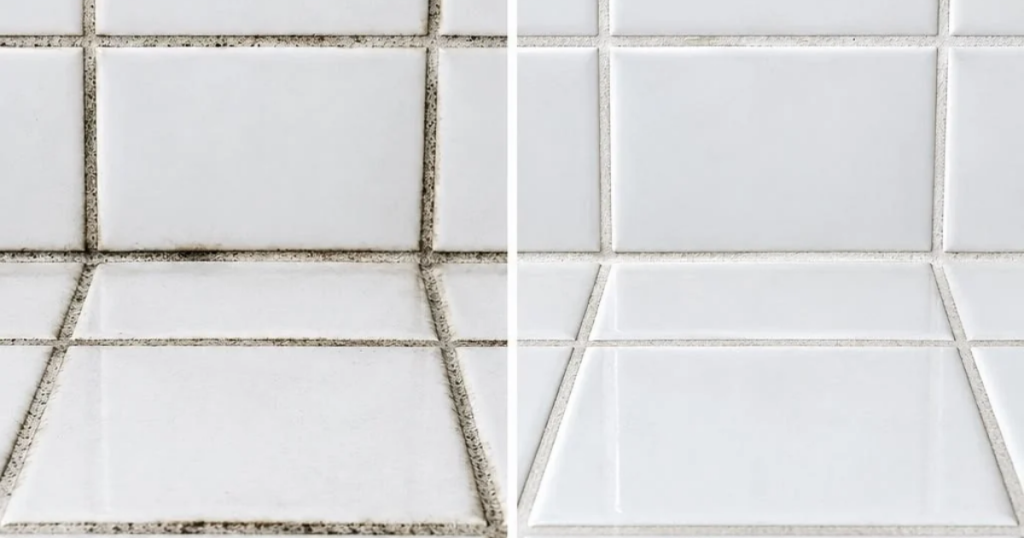
Old, stained bathroom grout can make your entire bathroom look dirty, even when you clean your tiles regularly. If your grout has turned yellow, brown or black, you may wonder whether professional cleaning can restore discoloured grout or whether you need to replace it.
The good news is that professional grout cleaning can often improve the appearance of old, discoloured grout. However, the right solution depends on the cause of the staining, the condition of the grout and how deeply the dirt has penetrated.
At GroutXpert, we help homeowners refresh tired-looking tiled surfaces with professional cleaning and restoration solutions. In this guide, we explain how to restore discoloured grout, when professional cleaning works best and when you may need a different treatment.
9 Common Reasons Bathroom Grout Becomes Discoloured
Before you try to restore discoloured grout, it helps to understand what caused the problem. Different types of staining may require different cleaning or restoration methods.
1. Soap Scum and Body Product Build-Up
Soap, shampoo, conditioner and body wash can leave residue along shower grout lines. Over time, this build-up attracts dirt and makes grout appear yellow, grey or dull.
Regular cleaning can reduce residue, but older deposits may need professional treatment.
2. Mould and Mildew
Bathrooms provide the moisture and warmth that mould needs to grow. Grout around showers, baths and wet areas can develop dark spots, particularly when ventilation is poor.
The New Zealand Ministry of Business, Innovation and Employment provides guidance on recognising mould and moisture problems.
Professional cleaning may help with surface staining. However, recurring mould can indicate a moisture problem that needs attention.
3. Hard Water and Mineral Deposits
Minerals in water can leave white, grey or cloudy deposits on tiles and grout. These marks often appear around shower areas, taps and other surfaces exposed to frequent water contact.
Suitable cleaning products may remove mineral deposits, but you should choose products that are safe for your tile and grout materials.
4. Dirt Trapped in Porous Grout
Grout lines can collect dust, soil, body oils and everyday dirt. Over time, these particles settle into the porous surface and become harder to remove with ordinary cleaning.
Professional grout cleaning can help lift this embedded grime and improve the overall appearance of your tiled surfaces.
5. Incorrect Cleaning Products
Some household cleaners can leave residue, while harsh or unsuitable products may damage grout or nearby tile finishes. Repeated use of the wrong products can make grout look uneven or dull.
Always check the manufacturer’s instructions and test a cleaning product on a small, inconspicuous area before using it across the bathroom.
6. Worn or Damaged Grout
Older grout may become rough, cracked, powdery or uneven. When the material deteriorates, cleaning alone may not restore its original appearance or provide a durable finish.
In these situations, you may need grout repairs or regrouting rather than cleaning alone.
7. Moisture and Poor Bathroom Ventilation
When moisture remains in a bathroom for long periods, grout can stay damp and become more vulnerable to mould and staining.
The New Zealand Ministry of Health’s healthy homes guidance recommends reducing dampness and maintaining a healthy indoor environment.
Improving ventilation and fixing leaks can help prevent new stains from returning after you restore discoloured grout.
8. Food, Cosmetics and Personal Care Products
Make-up, hair dye, skin care products and other bathroom items can leave stubborn marks on grout. Some products contain pigments or oils that cling to porous surfaces.
Clean spills promptly using a suitable product. Avoid aggressive scrubbing or harsh chemicals that could damage the grout or surrounding tiles.
9. Ageing Grout and Natural Colour Changes
Grout can change colour as it ages. Repeated exposure to water, cleaning products and everyday use may leave the surface looking faded or uneven.
If the grout is still in good condition, professional cleaning or recolouring may improve its appearance. If it is deteriorating, a professional assessment can help determine whether repairs or replacement are more suitable.
How Professionals Restore Discoloured Grout
Professional grout restoration involves identifying the problem first and choosing a suitable treatment. The process may vary depending on the type of tile, the grout material and the severity of the staining.
Step 1: Inspect the Grout and Tiles
A professional begins by checking the grout lines for staining, mould, cracks, missing sections and other signs of damage. This inspection helps determine whether cleaning is likely to deliver a good result.
Step 2: Choose a Suitable Cleaning Treatment
Different stains respond to different cleaning methods. Professionals select suitable products and equipment for the tile surface, grout condition and type of residue.
Step 3: Remove Embedded Dirt and Residue
Specialist cleaning equipment and appropriate cleaning solutions can help lift grime from grout lines. This process may improve the colour and appearance of grout that ordinary household cleaning has failed to refresh.
Step 4: Rinse and Assess the Results
After cleaning, the treated area is rinsed or wiped according to the chosen method. The professional then assesses the grout to determine whether further restoration is needed.
Step 5: Consider Grout Recolouring or Sealing
When cleaning does not fully restore the original colour, grout recolouring can help create a more uniform finish. Depending on the grout’s condition, sealing may also help protect suitable surfaces from future staining.
Learn more about GroutXpert’s grout recolouring service.
When Is Grout Cleaning Not Enough?
Professional cleaning can make a noticeable difference, but it cannot repair every grout problem.
When Grout Recolouring Is a Better Option
Grout recolouring may be suitable when the grout is still in reasonable condition but has permanent stains or an uneven colour. A suitable colour sealant can refresh the appearance without replacing all the existing grout.
When Regrouting Is Necessary
Regrouting may be needed when grout is cracked, crumbling, missing or badly deteriorated. A professional should assess the affected area before recommending the appropriate repair.
When Silicone Needs Replacing
Mouldy or deteriorated silicone around shower edges, baths and corners may not respond well to cleaning. If the silicone has failed, replacement may be necessary.
For broader shower repairs, explore GroutXpert’s bathroom shower grout and tile restoration service.
How to Keep Restored Grout Looking Cleaner for Longer
Once you restore discoloured grout, a few simple habits can help maintain the results.
- Clean regularly: Use a suitable bathroom cleaner and a soft brush to remove everyday dirt before it builds up.
- Dry wet surfaces: Wipe excess water from shower walls and other frequently wet areas where practical.
- Improve ventilation: Run the bathroom extractor fan during and after showering, following its operating instructions.
- Address leaks promptly: Repair leaking taps, shower fittings or other sources of persistent moisture.
- Avoid harsh products: Choose cleaning solutions that are compatible with your tile and grout materials.
- Consider suitable grout protection: Ask a professional whether sealing is appropriate for your grout type and condition.
For more practical advice, read our bathroom tile maintenance tips.
Frequently Asked Questions
Can professional cleaning restore discoloured grout to its original colour?
Professional cleaning can often improve grout colour by removing embedded dirt, soap scum and other residue. However, it may not remove permanent stains or reverse damage. Recolouring or regrouting may be needed in some cases.
Is it better to clean or replace old bathroom grout?
Cleaning is generally worth considering when the grout remains intact but looks dirty. If the grout is cracked, crumbling or missing, repairs or regrouting may be a better option.
Does grout recolouring work on old grout?
Grout recolouring can refresh the appearance of suitable existing grout that has become stained or faded. The grout should be assessed and prepared correctly to help the treatment perform as intended.
How can I prevent bathroom grout from becoming discoloured again?
Regular cleaning, good ventilation, prompt leak repairs and removing excess moisture can help reduce future staining. A suitable grout sealer may also help, depending on the grout material and condition.
Should I hire a professional to restore discoloured grout?
Professional help is worth considering when household cleaning no longer works, stains keep returning or you are unsure whether the grout needs cleaning, recolouring or replacement.
Restore Discoloured Grout with GroutXpert
Discoloured grout can make an otherwise clean bathroom look tired. The right treatment can help refresh your tiled surfaces without replacing them unnecessarily.
GroutXpert offers professional tile and grout cleaning, grout recolouring and bathroom shower restoration services to help improve the appearance of worn and stained grout.
If you want to restore discoloured grout in your bathroom, contact GroutXpert to discuss your requirements and find a suitable solution for your tiled surfaces.