
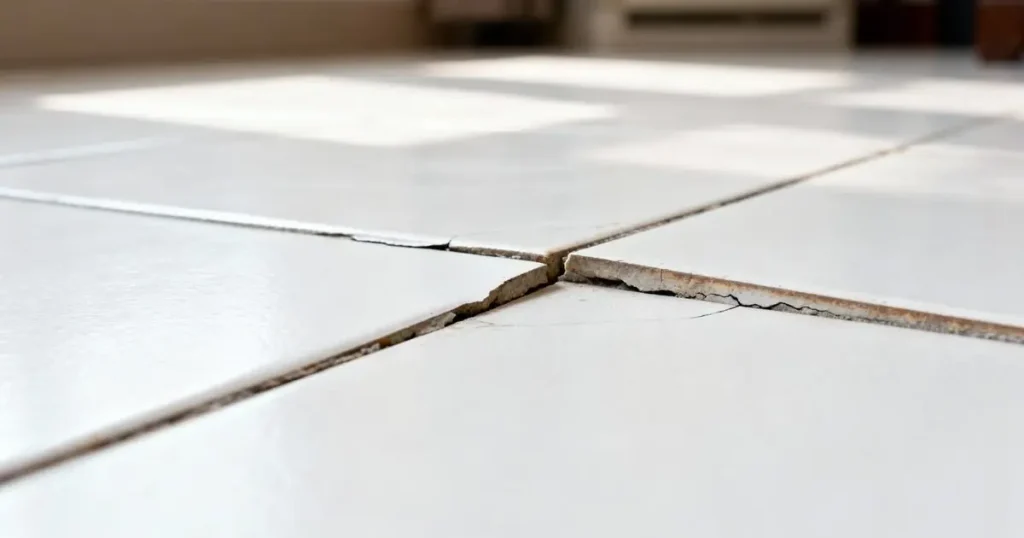
Bathroom tile lippage can make a newly tiled bathroom look uneven, poorly finished and uncomfortable to walk across. It happens when adjacent tiles sit at different heights, creating a noticeable raised edge between them. Understanding what causes bathroom tile lippage, how it can be fixed and how to prevent it can help you achieve a smoother, more professional bathroom finish.
A small amount of variation can occur because of tile characteristics and installation conditions. However, noticeable bathroom tile lippage can make a newly tiled bathroom look poorly finished and may become more obvious when light falls across the surface.
Lippage is particularly noticeable with large-format tiles, rectangular tiles and tiles installed with narrow grout joints. It can occur on both bathroom floors and walls.
If your tiles are otherwise in good condition, it is important to determine whether the problem is caused by the tiles, the substrate or the original installation before deciding that the entire tiled area needs replacing.
What Causes Bathroom Tile Lippage?
The cause of bathroom tile lippage usually starts underneath the tiles or during installation.
Several factors can create an uneven tile surface. Identifying the cause helps determine whether the problem can be corrected without removing the entire tiled area.
1. An Uneven Substrate
A level surface underneath the tiles is essential for an even finish.
If the floor or wall underneath the tiles has dips, bumps or movement, the tiles may follow those imperfections. Even high-quality tiles cannot always produce a flat finish when the substrate has not been prepared correctly.
Substrate preparation becomes especially important when installing large-format bathroom tiles because larger tiles have less flexibility to follow an uneven surface.
2. Incorrect Adhesive Application
The adhesive bed needs consistent coverage across the tile.
If adhesive is applied unevenly, some parts of a tile may sit higher than others. Air pockets or inconsistent adhesive thickness can also affect how firmly a tile sits against the substrate.
Proper adhesive selection and application are particularly important in wet areas. The New Zealand Building Code guidance on internal moisture highlights the importance of suitable wet-area construction, while wet-area membrane guidance explains why adhesive compatibility and adequate coverage matter when installing tiles over waterproofing systems.
3. Tile Size and Shape
Large and long tiles can make small installation errors much easier to see.
Large-format tiles are popular in bathrooms because they create fewer grout lines and a clean, modern appearance. However, their size can also make bathroom tile lippage more noticeable.
Long rectangular tiles can show differences between adjoining edges, particularly when the installation pattern places tile joints close together.
4. Tile Warpage
Sometimes the tiles themselves are not completely flat.
Manufacturing processes can cause slight curvature or warping in some tiles. When two slightly curved tiles meet, their edges may sit at different heights.
This does not automatically mean the tiles are defective. The tile type, size, installation method and manufacturer’s requirements all need to be considered when assessing the finished surface.
5. Poor Tile Installation Technique
Experienced installation matters when creating an even tiled surface.
Incorrect spacing, inconsistent adhesive coverage, inadequate substrate preparation or failing to check tile alignment during installation can all contribute to bathroom tile lippage.
This is one reason it is worth identifying the underlying cause before attempting a cosmetic repair.
Why Is Bathroom Tile Lippage a Problem?
Uneven tiles are more than just a visual issue.
Bathroom tile lippage can make cleaning more difficult because dirt and moisture may collect around raised edges. On floors, a significant height difference can also create a trip point.
In a wet area, the condition of the tiled surface should also be considered alongside the waterproofing system beneath it. New Zealand’s Building Code Clause E3 addresses internal moisture and requires wet-area surfaces to be impervious and easily cleaned, while also addressing ventilation and moisture management. You can read the relevant MBIE guidance on E3 Internal Moisture for more information.
That means a visible tile problem should not always be treated as a simple cosmetic issue. If tiles are loose, cracked or moving, there may be a wider problem that needs professional assessment.
Can Bathroom Tile Lippage Be Fixed?
The good news is that not every uneven tile surface requires a complete bathroom renovation.
Whether bathroom tile lippage can be fixed depends on how severe it is and what caused it.
Minor Bathroom Tile Lippage
Small differences between tile edges may not require tile replacement.
If the tiles are firmly bonded and the surface remains functional, a professional can assess the condition and determine whether restoration or other corrective work is appropriate.
However, grout alone cannot properly level a significantly raised tile. Trying to hide substantial lippage with additional grout usually creates another problem rather than fixing the original cause.
If the surrounding grout is cracked, stained or deteriorated, professional tile regrouting may improve the appearance of the tiled surface, but it will not correct a major difference in tile height.
Loose or Damaged Tiles
Movement is a stronger warning sign than a small height difference.
If a tile moves when you press it, sounds hollow or has cracked around the edges, the issue may involve poor bonding, substrate movement or moisture-related damage.
GroutXpert provides tile and grout sealing and repair services for cracked, broken and loose tiles. A professional assessment can help determine whether an individual tile can be repaired or needs to be replaced.
Severe Bathroom Tile Lippage
Major height differences may require individual tiles to be removed and replaced.
When lippage is substantial, the best solution may involve removing the affected tiles, checking the substrate and installing replacement tiles correctly.
If the underlying surface is uneven, simply replacing the visible tile without correcting the substrate may cause the same problem to return.
In wet areas, tile removal must also be carried out carefully to avoid damaging the waterproofing system beneath the tiles.
Does Regrouting Fix Bathroom Tile Lippage?
Regrouting can improve damaged grout, but it does not normally correct uneven tile heights.
Regrouting is useful when grout has become cracked, stained, loose or damaged. It involves removing deteriorated grout and installing new grout between the existing tiles.
However, bathroom tile lippage is a difference in the height of the tile surfaces themselves. Regrouting cannot physically lower a tile that sits too high.
GroutXpert’s professional tile regrouting service is designed to replace damaged grout and refresh tiled surfaces without automatically replacing the existing tiles.
For more information about when regrouting may be suitable, read How to Fix Cracked Shower Grout.
This distinction is important. If your main problem is cracked grout, regrouting may be suitable. If the main problem is uneven tile levels, the tiles and substrate need to be assessed first.
How Professionals Assess Bathroom Tile Lippage
A proper inspection should look beyond the visible unevenness.
A professional assessment can help determine whether the issue is isolated or affects a larger section of the bathroom.
Step 1: Check the Tile Surface
The first step is to identify where the height difference occurs.
The technician can inspect the tile edges and determine whether the lippage affects one tile, several tiles or an entire section.
Step 2: Check for Loose Tiles
Tile movement can indicate a deeper problem.
Loose tiles may suggest inadequate bonding, substrate movement or moisture-related problems. These issues need different solutions from simple surface restoration.
Step 3: Inspect the Grout
Damaged grout can provide useful clues about what is happening around the tiles.
Cracks, gaps and crumbling grout can indicate movement or deterioration. If grout is failing repeatedly, repairing the grout without investigating the cause may only provide a temporary result.
If the grout is heavily stained or difficult to clean, professional cleaning may be appropriate before deciding whether further restoration is needed. GroutXpert explains the benefits of professional tile and grout cleaning for bathrooms and other tiled areas.
Step 4: Consider the Wet-Area Construction
Bathrooms need more than a good-looking tile finish.
Waterproofing beneath bathroom tiles plays an important role in protecting the building structure. MBIE’s guidance on E3 Internal Moisture and wet-area membrane systems highlights the importance of correctly designed and installed waterproofing systems beneath tiled wet areas.
If removing tiles is necessary, care must be taken not to damage the waterproofing system underneath.
Bathroom Tile Lippage vs Uneven Grout: What’s the Difference?
These two problems can look similar but require different solutions.
| Problem | What You See | Typical Solution |
|---|---|---|
| Bathroom tile lippage | One tile sits higher than another | Assess tiles, adhesive and substrate |
| Cracked grout | Cracks running through grout joints | Grout repair or regrouting |
| Missing grout | Gaps between tiles | Grout replacement |
| Loose tile | Tile moves or sounds hollow | Tile repair or replacement |
| Uneven substrate | Multiple tiles follow dips or bumps | Substrate correction and possible ret tiling |
Knowing the difference helps prevent unnecessary work. A bathroom may need grout restoration rather than tile replacement, or it may need a more involved repair if the tiles themselves are unstable.
For an overview of available restoration options, see GroutXpert’s guide to tile and grout restoration for Wellington and Palmerston North homes.
Can You Prevent Bathroom Tile Lippage?
Good preparation is the best way to reduce the risk of uneven tiles.
Prepare the Substrate Properly
A flat and stable base gives tiles a better chance of finishing evenly.
Before installation, the substrate should be checked for uneven areas, movement and other defects.
Use the Correct Adhesive
The adhesive needs to suit both the tile and the installation environment.
Wet-area tile installation requires products and methods that are compatible with the waterproofing system and the tiles being installed. The Building CodeHub guidance on waterproofing tiled showers provides useful information about wet-area construction requirements.
Allow for Tile Characteristics
Tile size, shape and pattern can influence how visible lippage becomes.
Large-format and long tiles need careful planning because even small differences can become visually obvious.
Check Tiles During Installation
Regular checks help catch uneven areas before the adhesive sets.
Installers should continually check alignment and tile levels rather than waiting until the entire surface is finished.
When Should You Call a Professional?
Early assessment can prevent a small tile problem from becoming a larger repair.
Consider getting professional advice if you notice:
- Tiles sitting noticeably higher than neighbouring tiles
- Loose or moving bathroom tiles
- Repeatedly cracked grout
- Cracks around tile edges
- Water appearing around or beneath tiled areas
- Tiles that sound hollow when tapped
- Uneven flooring that creates a trip point
- Dampness or other signs of moisture damage
GroutXpert provides tile and grout cleaning, regrouting, sealing and repair services across Wellington and Palmerston North.
If your bathroom has both uneven tiles and damaged grout, a combined inspection can help establish which areas need repair and which areas can be restored.
For shower-specific problems, you can also explore GroutXpert’s shower restoration services, which may be suitable for deteriorated grout, sealant and tiled shower surfaces.
Frequently Asked Questions About Bathroom Tile Lippage
Is bathroom tile lippage normal?
A small amount of variation can occur, but noticeable unevenness should be assessed.
Tile characteristics, installation methods and applicable standards all influence acceptable finished results. If the height difference is obvious, uncomfortable or associated with loose tiles or damaged grout, professional assessment is worthwhile.
Can grout hide bathroom tile lippage?
Grout is not a proper solution for significant tile height differences.
Grout fills the joints between tiles. It does not correct a tile that has been installed too high or a substrate that is uneven.
Is bathroom tile lippage more common with large tiles?
Large-format tiles can make lippage more noticeable.
Their larger surface area and longer edges make differences between adjoining tiles easier to see, especially where lighting hits the surface at an angle.
Can one uneven bathroom tile be replaced?
Yes, an individual tile may be replaceable if the surrounding installation remains sound.
The replacement process needs to consider the existing grout, adhesive and waterproofing beneath the tile. Careful removal is particularly important in wet areas.
GroutXpert’s tile repair and replacement service can help assess cracked, broken or loose tiles.
Does bathroom tile lippage mean the whole bathroom needs retiled?
Not necessarily.
The extent of the problem matters. If only a few tiles are affected and the surrounding installation is stable, targeted repair may be possible. A professional inspection can help establish the most practical option.
Final Thoughts on Bathroom Tile Lippage
Uneven tiles do not always mean you need to start your bathroom renovation again.
Bathroom tile lippage can result from substrate problems, adhesive application, tile characteristics or installation technique. The right solution depends on the cause and severity of the problem.
If your tiles are secure but the grout has deteriorated, restoration or tile regrouting may be the more practical option. If tiles are loose, damaged or significantly uneven, they may require individual repair or replacement.
The key is to assess the problem before choosing a solution. This can help you avoid unnecessary tile replacement while ensuring that any underlying moisture, bonding or substrate issues receive the attention they need.
Need Help With Uneven Bathroom Tiles?
Don’t let bathroom tile lippage become a bigger problem.
GroutXpert provides professional tile and grout cleaning, regrouting, tile repairs, sealing and bathroom restoration services across Wellington and Palmerston North. If your bathroom tiles look uneven, damaged or worn, contact GroutXpert for an assessment and find out whether your tiles can be restored rather than replaced.
Call GroutXpert on 0800 08 4444 or request a free quote today.